Why The Drafting Lawyer Should NEVER Be the Notary on a Prenuptial Agreement
One of the biggest prenup mistakes we see? The drafting lawyer acting as a notary.
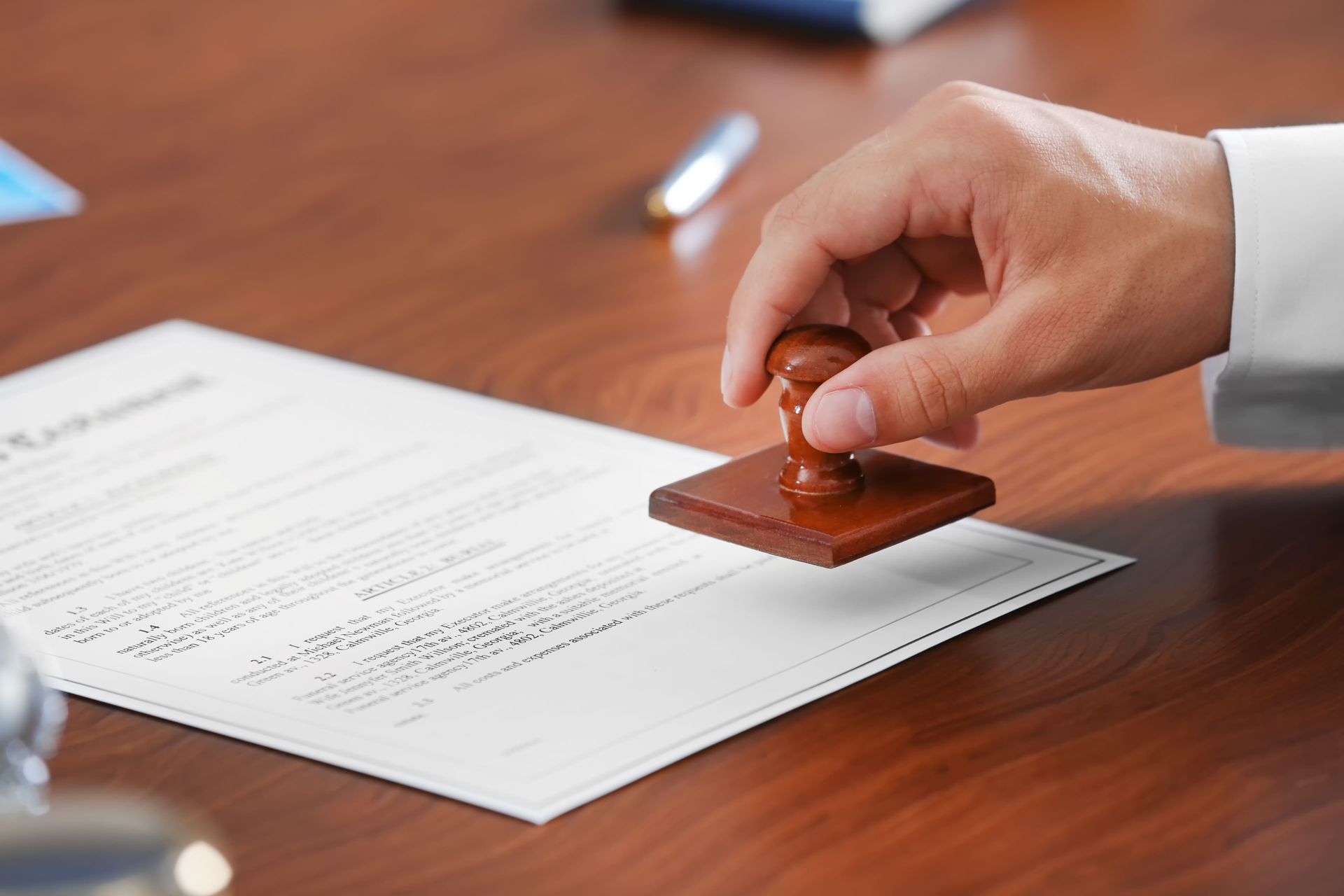
When a prenuptial agreement is signed, most couples focus on the terms—assets, liabilities, and future expectations. But what often determines whether a prenup holds up later is not just what it says, but how it was executed.
One of the most important—and frequently mishandled—details is notarization.
Having the same lawyer who drafted the prenup also act as the notary may seem efficient. In reality, it can undermine one of the most critical safeguards in the signing process: independent verification.
Notarization Is Not Just a Formality
A notary public is intended to serve as a neutral, third-party witness who confirms:
- The identity of each signer
- That each person is signing voluntarily
- That each person appears to have the capacity to understand the agreement
In prenuptial agreements (where enforcement can hinge on claims of duress, coercion, or lack of capacity), this independent verification can become key evidence.
Why the Drafting Lawyer Should Not Be the Notary
When the drafting attorney also notarizes the agreement, you lose the benefit of a second, independent set of eyes at execution.
Instead of two separate roles (advocate and neutral witness), you have one individual performing both.
That creates real risk:
- No true independent verification
- Reduced evidentiary weight if challenged
- Blurring of roles between advocate and neutral
- Greater vulnerability to claims of imbalance or pressure
- Courts look at the Totality of the Circumstances
Across jurisdictions, courts evaluating prenuptial agreements commonly look at the totality of the circumstances surrounding execution, including:
- Whether the agreement was entered into voluntarily
- Whether both parties had a meaningful opportunity to review
- Whether either party was under pressure or duress
- Whether each person had the capacity to understand the agreement
A neutral notary supports these factors. A non-neutral or affiliated notary can undermine them.
The Reality of Attorney-Affiliated Notaries
Even when the notary is not the drafting lawyer, using a notary employed by that lawyer raises similar concerns.
Think about it: Is an attorney's own employee ever going to testify differently from the attorney? The judge or jury will think about that, too.
An employee notary operates within the structure and direction of their employer. While they are expected to act impartially, they may be perceived as following workplace instruction rather than functioning as a fully independent witness.
That perception alone can become a point of attack if the agreement is later challenged.
The False Economy: Saving a Small Fee Can Cost You Later
Some couples choose to notarize their prenup through their attorney simply to save a nominal fee or avoid inconvenience. However, those small savings can come at a high cost.
If the agreement is ever challenged, the lack of independence in notarization may become a focal point for questioning the integrity of the entire execution process.
Lawyers Are Not Permanent Witnesses
There is also a practical reality that is often overlooked: Lawyers retire. Lawyers relocate. Lawyers pass away.
If the drafting attorney is also the notary, you may lose your only witness to execution—or be left with testimony that is inherently non-neutral.
A separate, third-party notary creates a second, independent authenticator whose role stands on its own.
Best Practice? Use a Neutral Third-Party Notary
For stronger enforceability, the best practice is simple:
Use a notary who is completely unaffiliated with either party and their attorneys.
This provides:
- A true second set of eyes
- Stronger evidence of voluntariness and capacity
- Greater credibility if the agreement is challenged
- Independent authentication years later
- An Inclusive Best Practice for All Couples
These principles apply universally to couples entering into prenuptial agreements. The goal is the same in every case: to create a fair, enforceable agreement that reflects mutual intent and withstands scrutiny over time.
A neutral execution process supports that goal without unnecessary emphasis on differences.
Final Takeaways
Agreements succeed or fail at execution, which is why the process is so important.
Using the drafting lawyer as the notary may save a small amount of time or money... but it comes at the cost of losing independent verification at the most important moment.
A neutral, third-party notary restores that protection.
And when it comes to something as significant as a prenuptial agreement, having a second, independent authenticator is not just better practice—it is a smart investment in the agreement’s long-term enforceability.
About the Author
Chantale L. Suttle, Esq. is an attorney focused on prenuptial and postnuptial agreements. Her practice emphasizes clarity, enforceability, and balanced execution processes, helping couples create agreements designed to withstand legal scrutiny over time.